
Work
About

Work
About
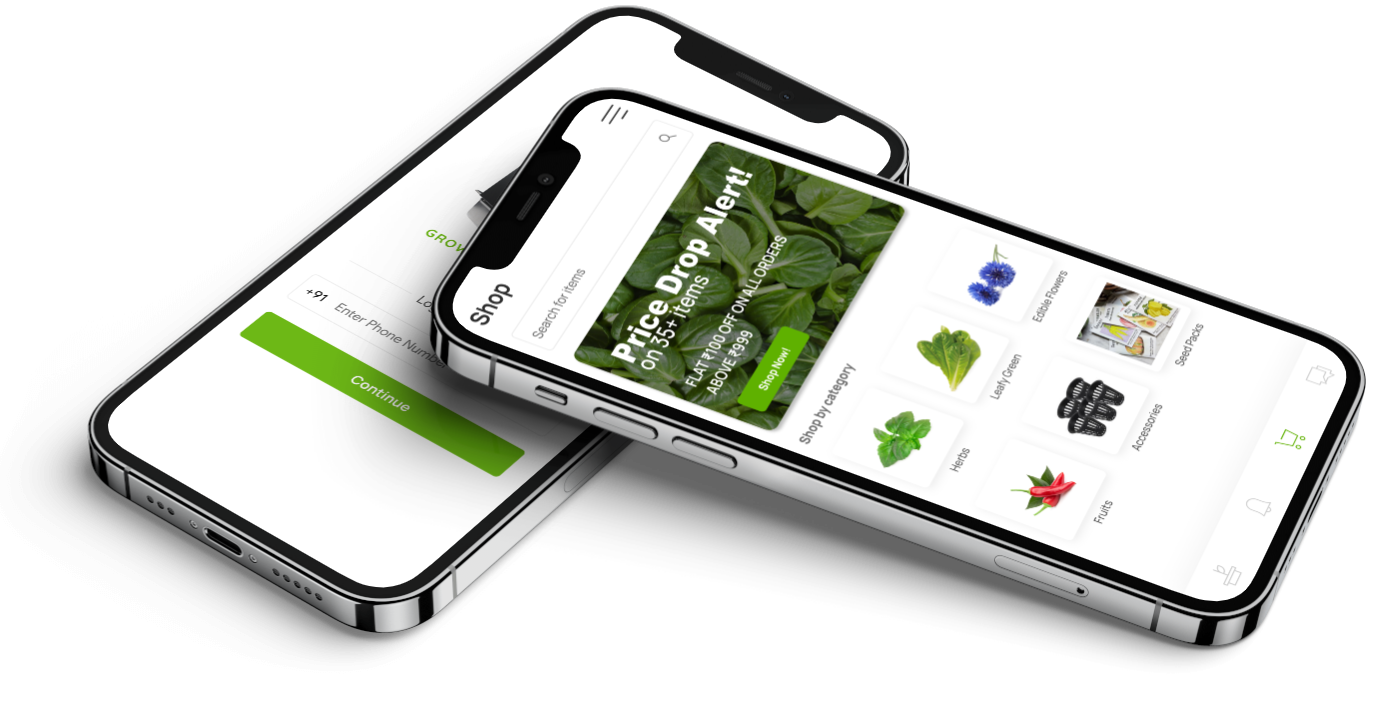

IoT enabled urban farming system that empowers users to grow their fresh and chemical-free leafy vegetables, herbs, and microgreens.
Scope
Design and development of mobile application and hardware system.
Team Size
8
Role
Team Leader
Problem.
Leafy vegetables and herbs often travel long distances before reaching our dinner table, which can take up to 18-20 hours post-harvest.
As a result, the produce loses freshness, nutrition, and taste. Vendors often try to keep the produce fresh by using harmful chemicals which makes the produce toxic for consumption.
Some people try to grow their own food, However, growing your own vegetables and herbs using traditional methods can be challenging due to limited space and the time and effort required.
User Research.
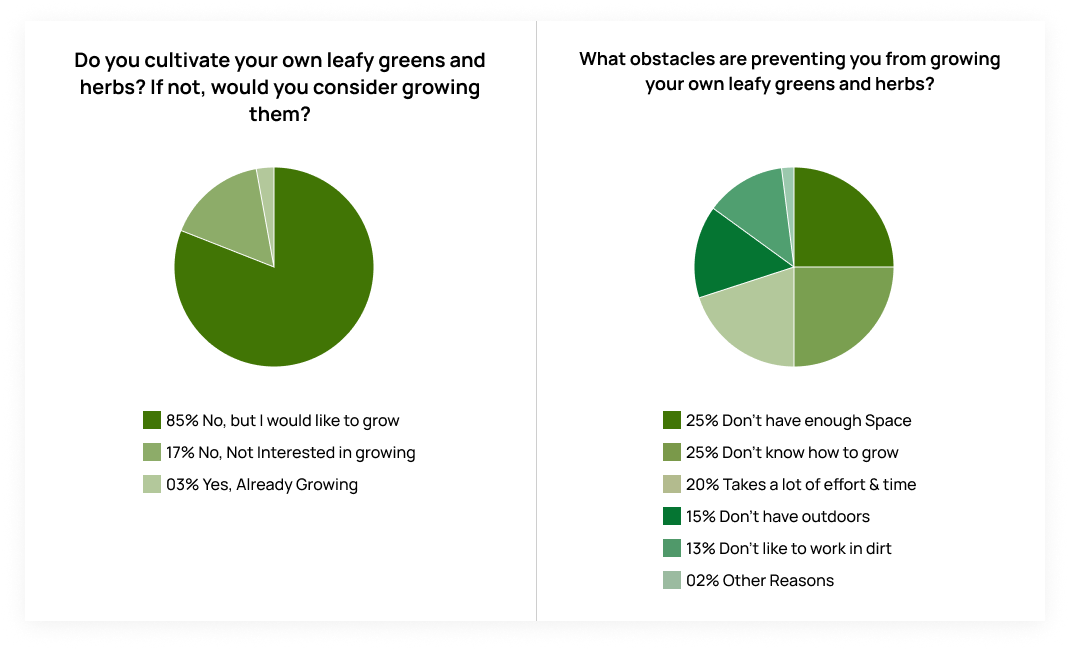
After recognizing the problem, we interviewed 80 candidates. Our objective was to gain insights into their sentiments and attitudes towards cultivating leafy green vegetables and herbs indoors on their own.
To minimize the sample bias we made sure to exclude grading enthusiasts from the survey. We also made it a point to include various professions, income groups, ages, and genders.
The key findings of the research were -
Solution.
After conducting a thorough brainstorming sessions, we were able to distill our ideas into key features
The ideal product should possess a small footprint, ensuring it occupies minimal space wherever it is placed. Moreover, it should operate efficiently indoors, eliminating the necessity for direct exposure to sunlight. To enhance convenience, the product should incorporate IoT-based automation, reducing the requirement for frequent human intervention. A desirable design approach involves creating a product that resembles a home appliance, allowing it to be easily stored in a kitchen. This practical and aesthetically pleasing design not only complements the surroundings but also adds to the overall appeal of the product.
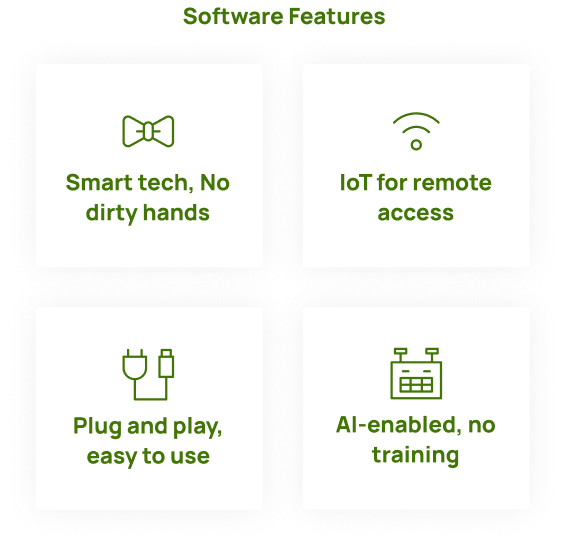
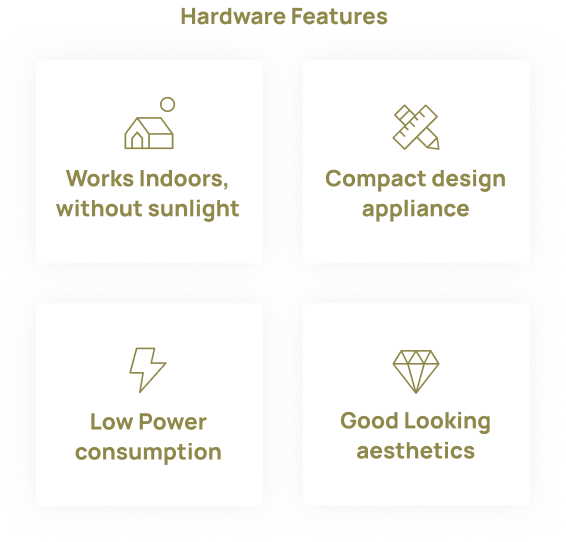
By focusing on these core elements, we are confident that our solution will meet the needs and expectations of our target customers.
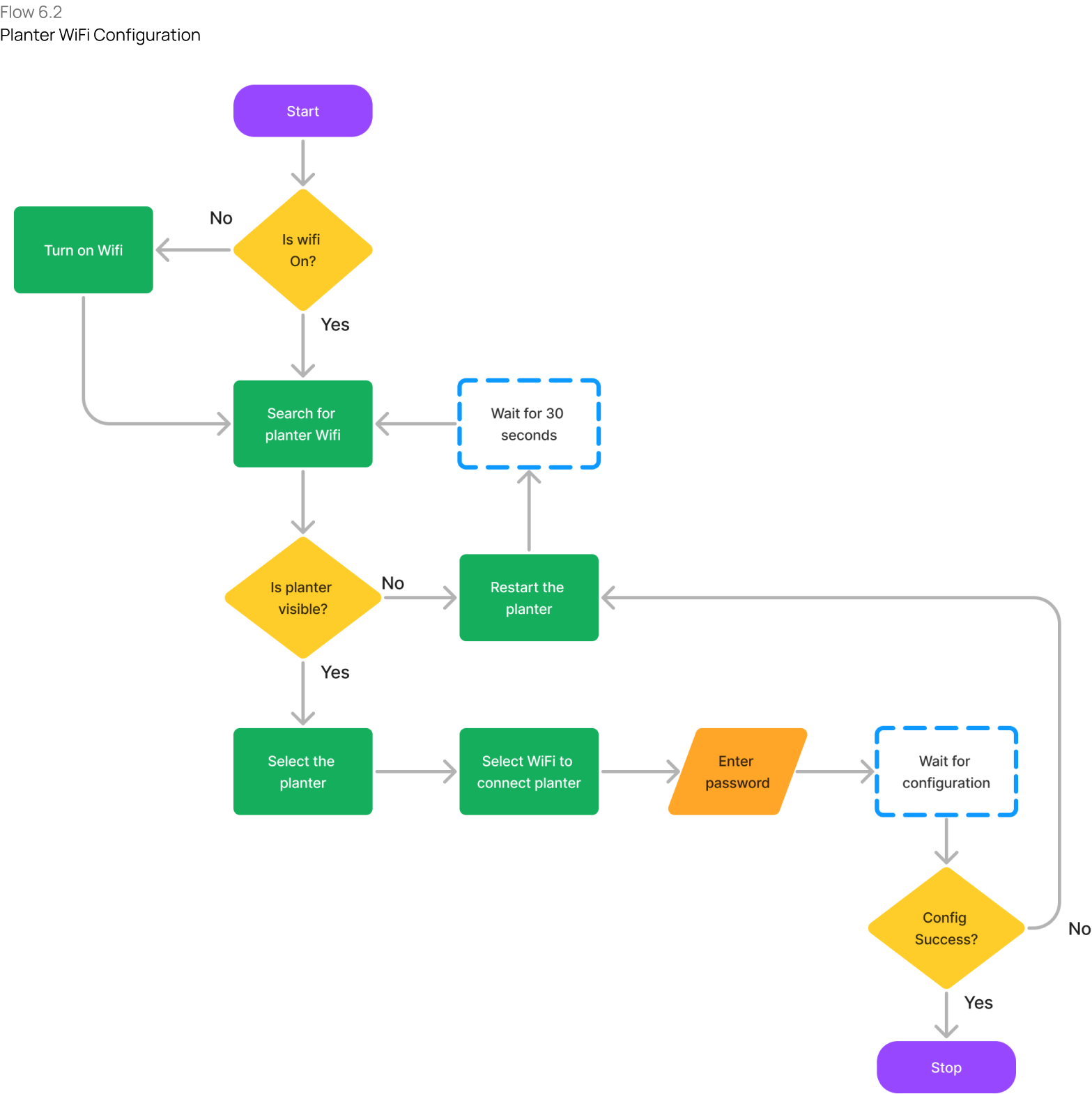
Flowcharts.
After finalizing the key features of our product, our team began working on the flowcharts of the core functionalities
Our primary objective was to ensure that these functions were viable for development and easy enough for users to understand.
Sample Flowchart.
Wireflows.
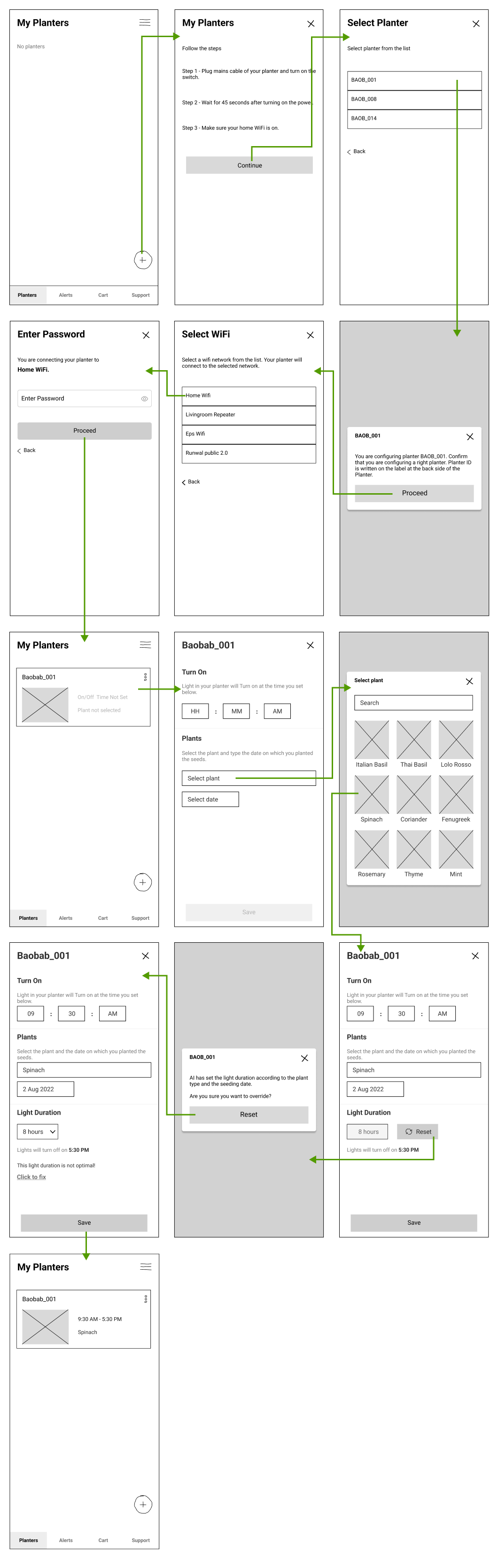
After finalizing the flowcharts of our product's core functionalities, we moved on to creating wireflows.
Wireflows are essential in translating the user experience into a tangible and interactive design. We created a series of screens or wireframes that represented the user's journey through the product.
Wireflow Sample.
Mockups.
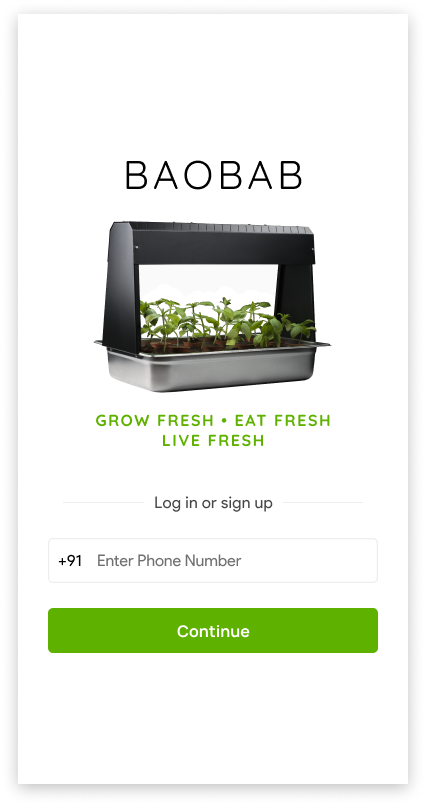
After gathering feedback from all relevant stakeholders on the wireframe blueprints, we proceeded to the next phase of the design process by creating high-fidelity mockups of the app.
This stage involved converting the finalized wireframes into fully-realized digital designs that accurately represented the final product. By using a combination of color, typography, and other design elements, we were able to create a visually appealing and intuitive interface that would be both functional and aesthetically pleasing to users.
Mockup Samples.
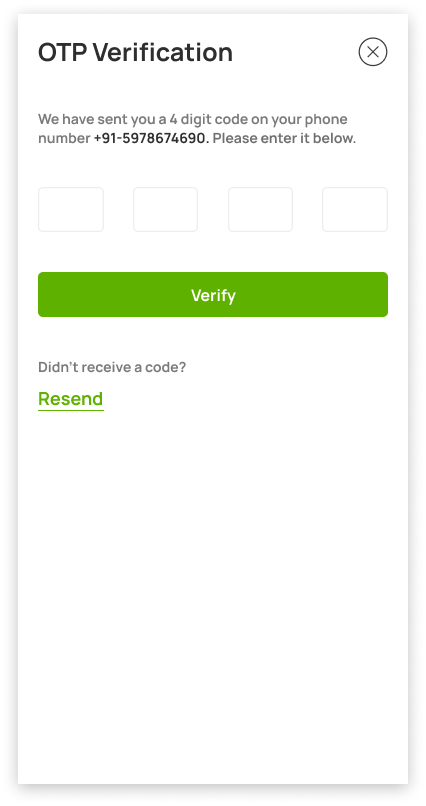
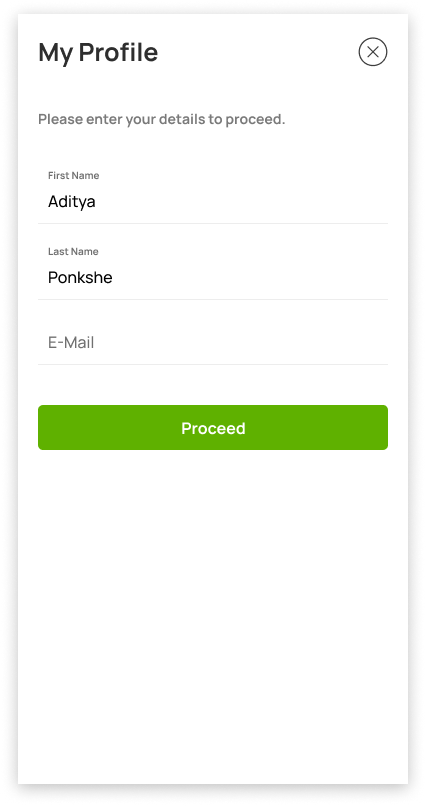
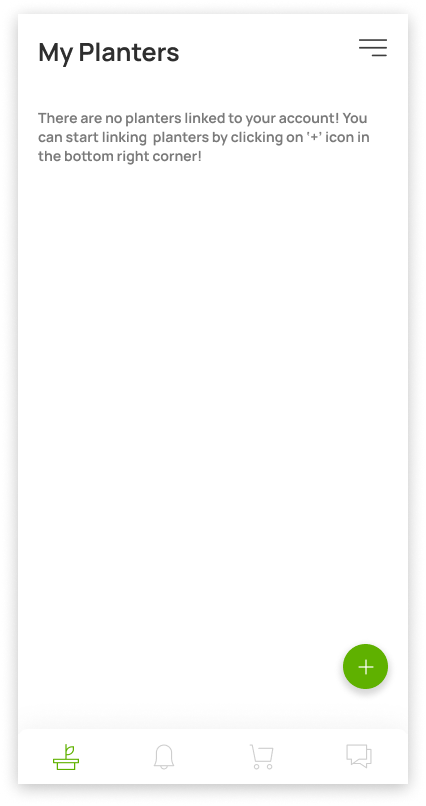
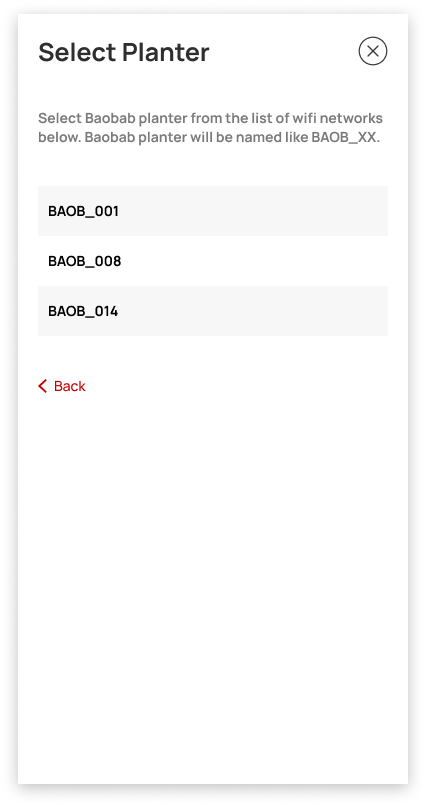
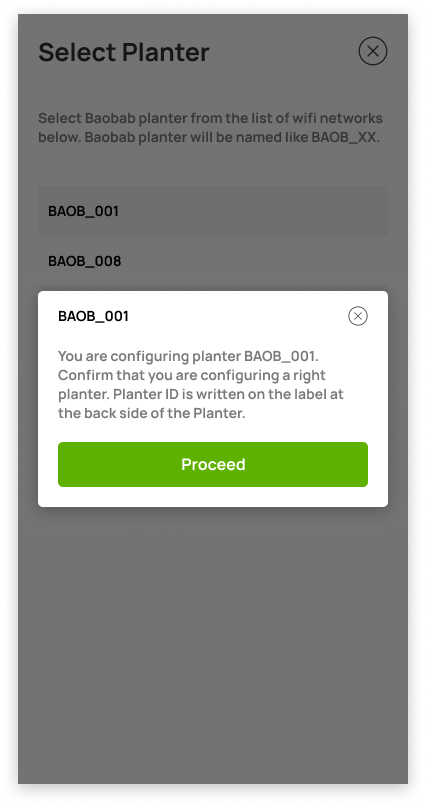
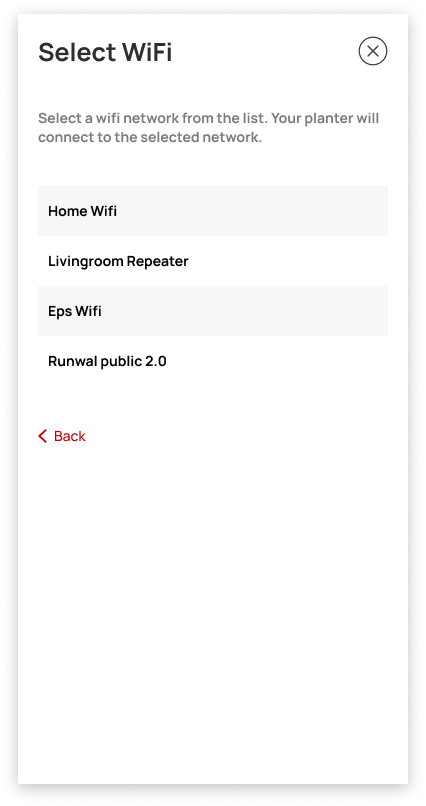
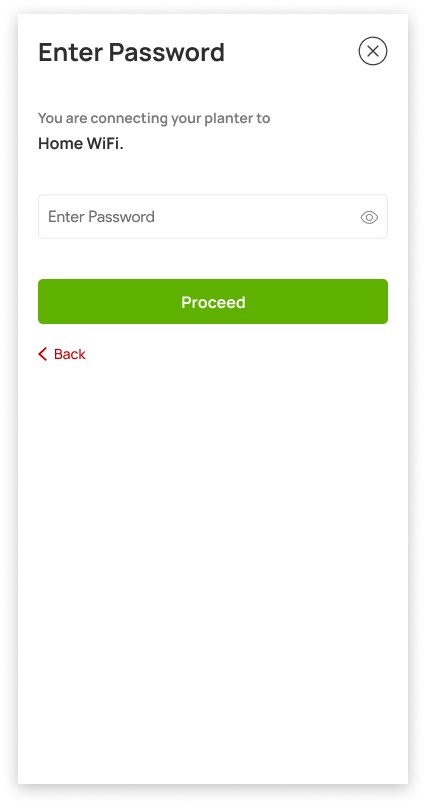
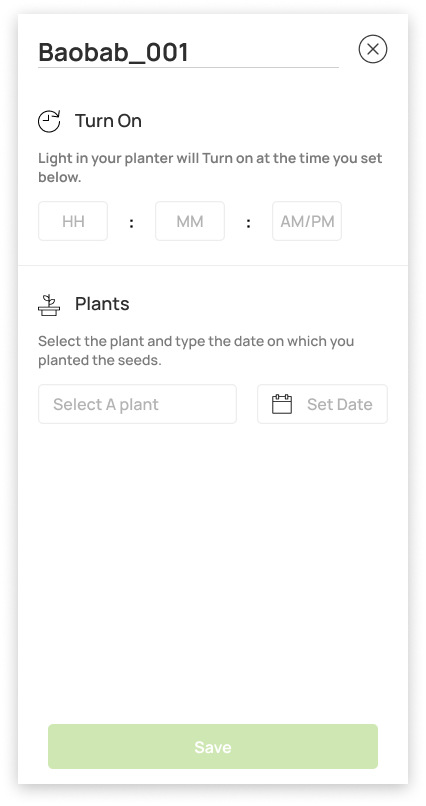
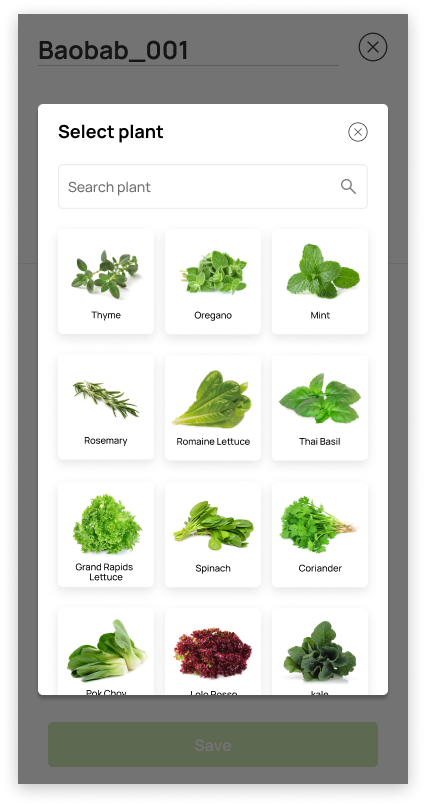
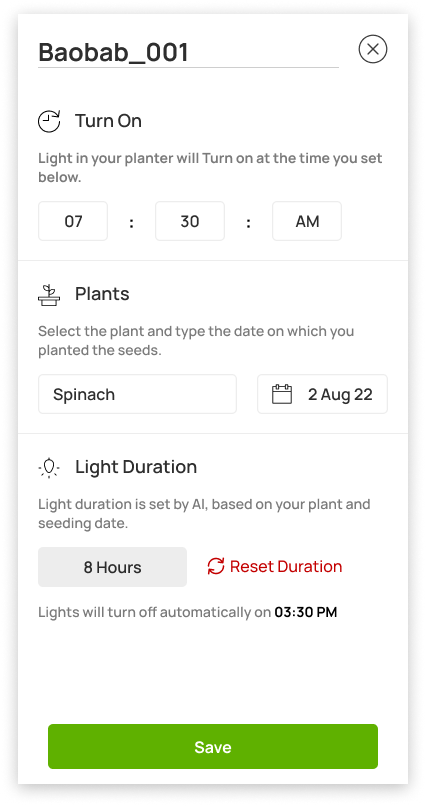
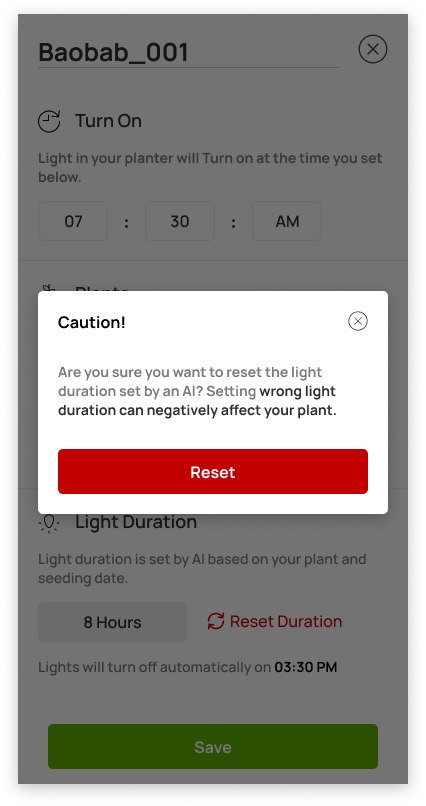
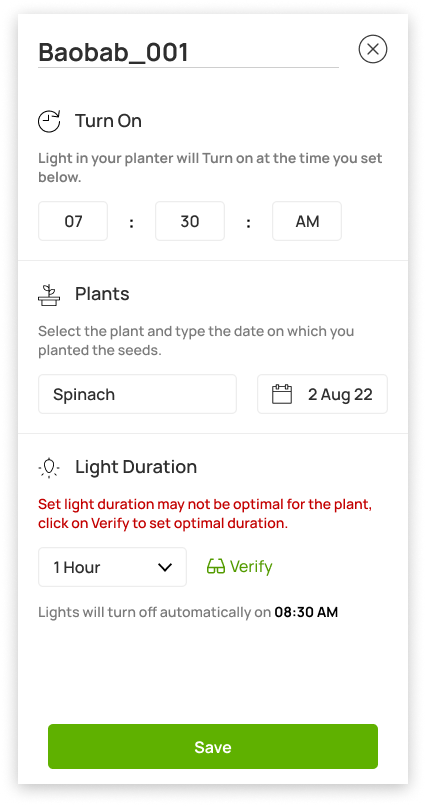
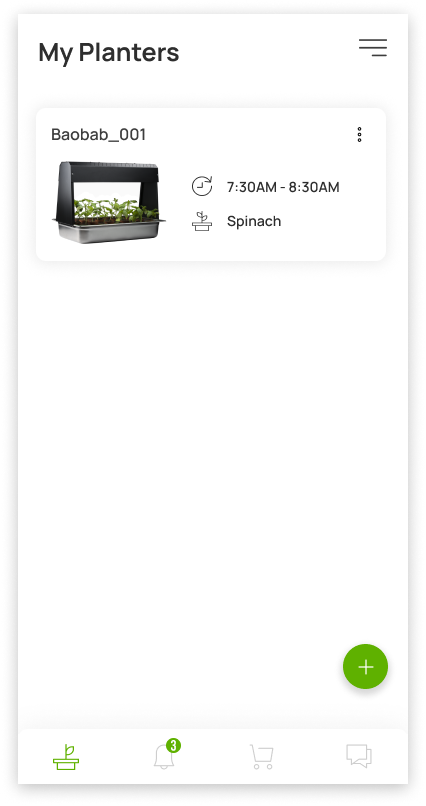
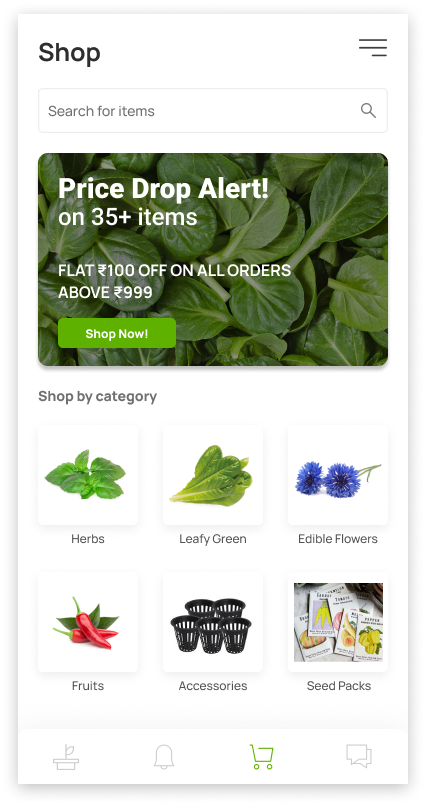
This stage was critical in ensuring that the product was both easy to use and visually appealing, as it allowed us to refine the design until we achieved the desired result.
Hardware Design.
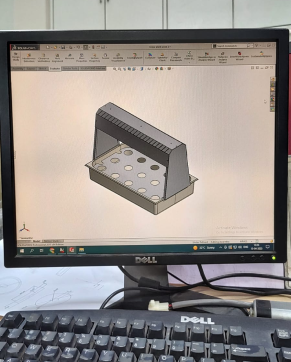
Throughout the development process, our team worked in parallel on both the app and hardware design. One of our biggest challenges was to create a hardware unit that felt like a natural fit in a kitchen environment. To achieve this, we made the decision to use premium materials such as stainless steel and mild steel instead of plastic. This not only enhanced the aesthetics of the product but also ensured its durability and longevity.
In designing the hardware, we worked closely with the production team to ensure that our designs were feasible for production. This collaboration was crucial in helping us create a product that not only met our design goals but was also practical and cost-effective to manufacture.
Through multiple iterations and constant feedback, we were able to develop a hardware unit that not only met the design criteria but also fulfilled the requirements of our production team.
Current Status.
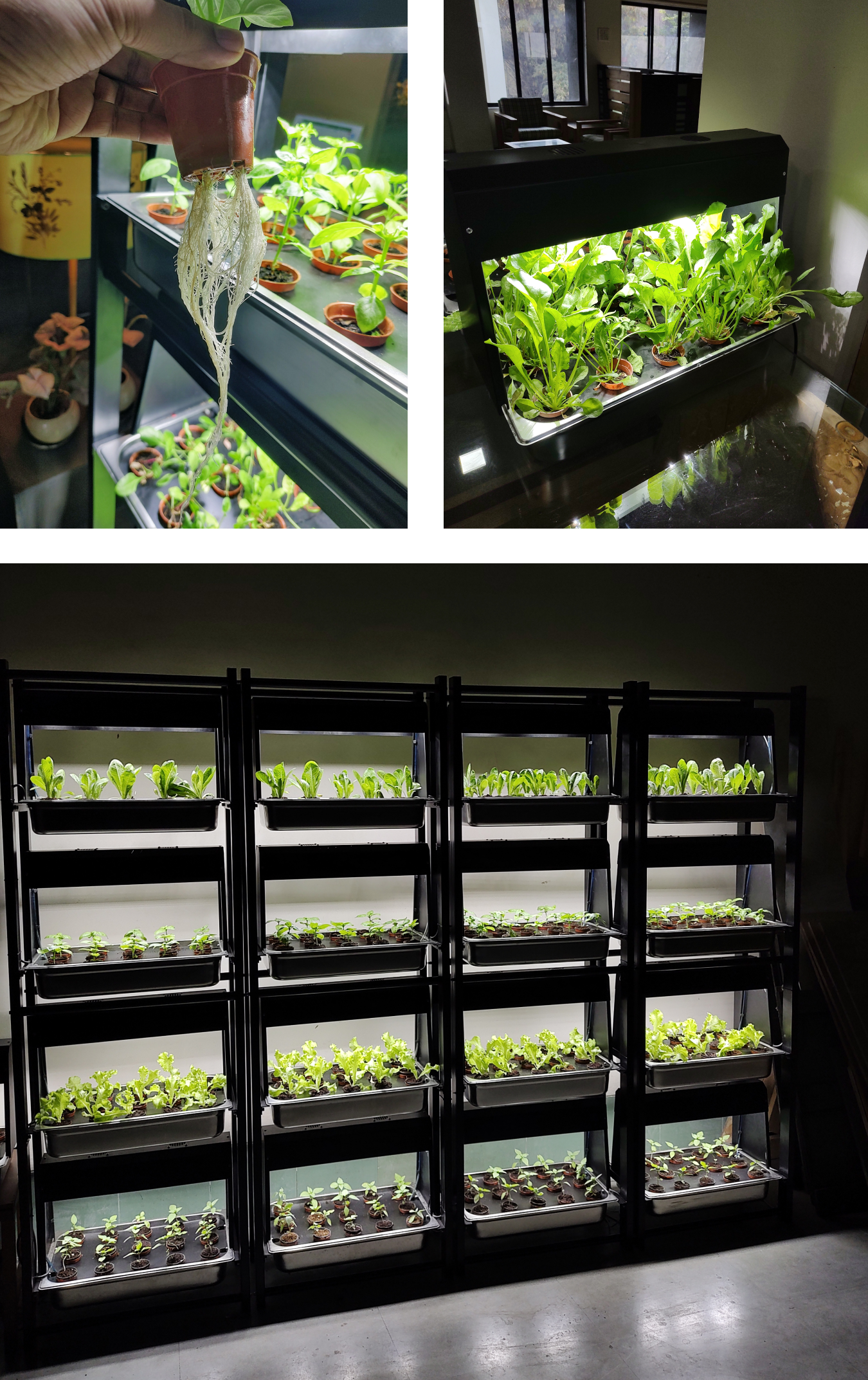
In the pre launch, operational acceptance testing phase with a group of 80 users located throughout India.
Check Other Work

IoT enabled urban farming system that empowers users to grow their fresh and chemical-free leafy vegetables, herbs, and microgreens.
Scope
Design and development of mobile application and hardware system.
Team Size
8
Role
Team Leader
Problem.
Leafy vegetables and herbs often travel long distances before reaching our dinner table, which can take up to 18-20 hours post-harvest.
As a result, the produce loses freshness, nutrition, and taste. Vendors often try to keep the produce fresh by using harmful chemicals which makes the produce toxic for consumption.
Some people try to grow their own food, However, growing your own vegetables and herbs using traditional methods can be challenging due to limited space and the time and effort required.
User Research.
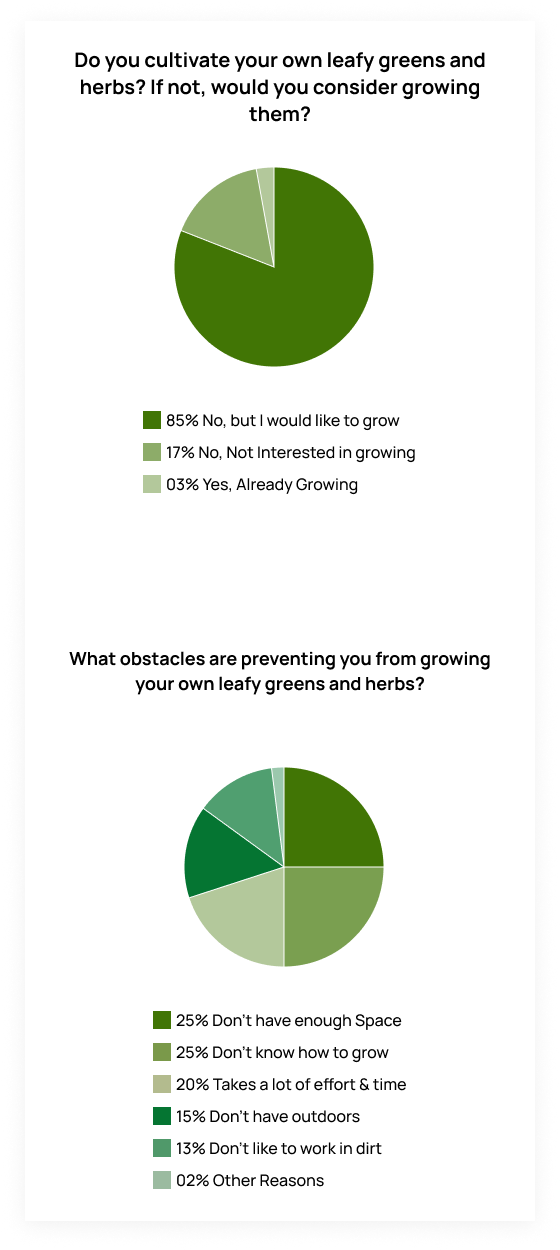
After recognizing the problem, we interviewed 80 candidates. Our objective was to gain insights into their sentiments and attitudes towards cultivating leafy green vegetables and herbs indoors on their own.
To minimize the sample bias we made sure to exclude grading enthusiasts from the survey. We also made it a point to include various professions, income groups, ages, and genders.
The key findings of the research were -
Solution.
After conducting a thorough brainstorming sessions, we were able to distill our ideas into key features
The ideal product should possess a small footprint, ensuring it occupies minimal space wherever it is placed. Moreover, it should operate efficiently indoors, eliminating the necessity for direct exposure to sunlight. To enhance convenience, the product should incorporate IoT-based automation, reducing the requirement for frequent human intervention. A desirable design approach involves creating a product that resembles a home appliance, allowing it to be easily stored in a kitchen. This practical and aesthetically pleasing design not only complements the surroundings but also adds to the overall appeal of the product.
By focusing on these core elements, we are confident that our solution will meet the needs and expectations of our target customers.
Flowcharts.
After finalizing the key features of our product, our team began working on the flowcharts of the core functionalities
Our primary objective was to ensure that these functions were viable for development and easy enough for users to understand.
Sample Flowchart.
Wireflows.
After finalizing the flowcharts of our product's core functionalities, we moved on to creating wireflows.
Wireflows are essential in translating the user experience into a tangible and interactive design. We created a series of screens or wireframes that represented the user's journey through the product.
Wireflow Samples.
Mockups.
After gathering feedback from all relevant stakeholders on the wireframe blueprints, we proceeded to the next phase of the design process by creating high-fidelity mockups of the app.
This stage involved converting the finalized wireframes into fully-realized digital designs that accurately represented the final product. By using a combination of color, typography, and other design elements, we were able to create a visually appealing and intuitive interface that would be both functional and aesthetically pleasing to users.
Mockup Samples.
This stage was critical in ensuring that the product was both easy to use and visually appealing, as it allowed us to refine the design until we achieved the desired result.
Hardware Design.
Throughout the development process, our team worked in parallel on both the app and hardware design. One of our biggest challenges was to create a hardware unit that felt like a natural fit in a kitchen environment. To achieve this, we made the decision to use premium materials such as stainless steel and mild steel instead of plastic. This not only enhanced the aesthetics of the product but also ensured its durability and longevity.
In designing the hardware, we worked closely with the production team to ensure that our designs were feasible for production. This collaboration was crucial in helping us create a product that not only met our design goals but was also practical and cost-effective to manufacture.
Through multiple iterations and constant feedback, we were able to develop a hardware unit that not only met the design criteria but also fulfilled the requirements of our production team.
Current Status.
In the pre launch, operational acceptance testing phase with a group of 80 users located throughout India.
Check Other Work