
Work
About

Work
About
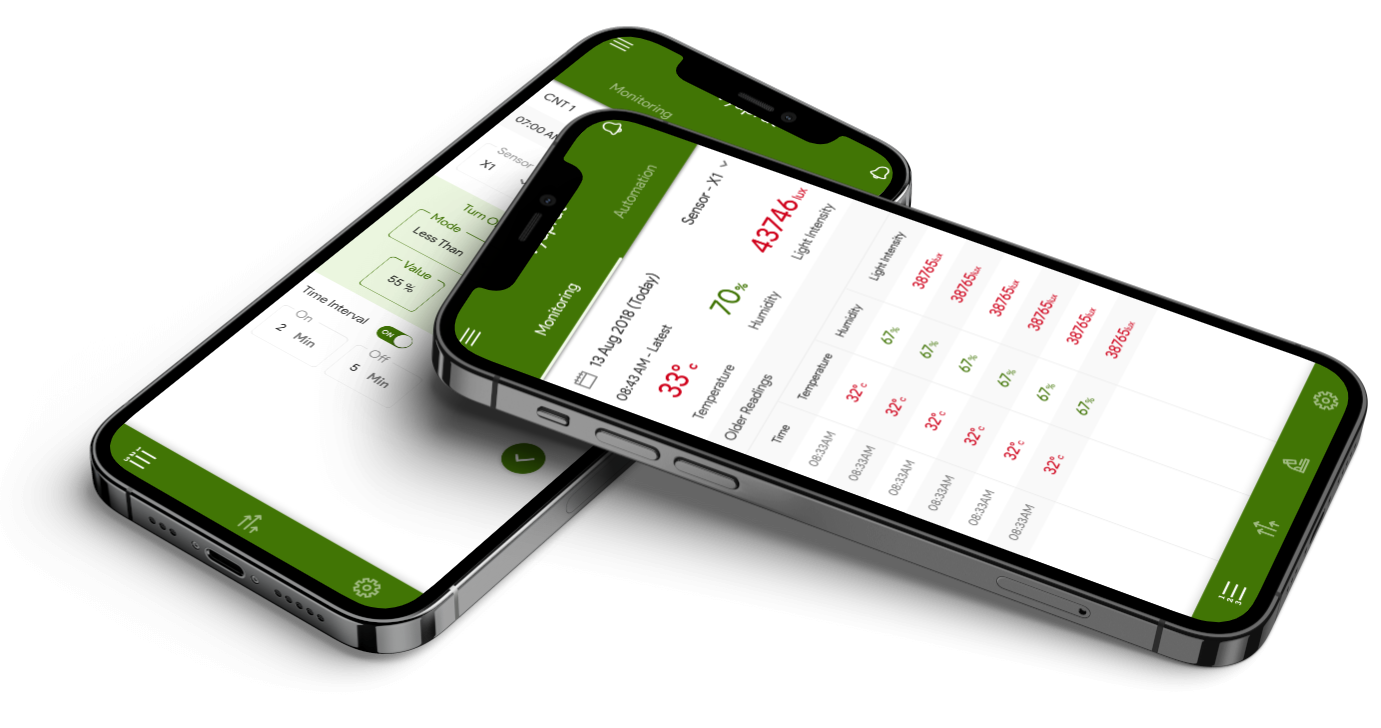
Affordable and easy to use, cloud-based remote climate monitoring and climate control application for protected cultivation.
Scope
Design and development of mobile application and hardware system.
Team Size
5
Role
Team Leader
Problem.
Despite employing 43% of India's workforce, the agriculture sector contributes only 16% to the country's economy. the sector lacks productivity and efficiency.
This is especially true for protected cultivation, where monitoring and maintaining optimal climate is paramount to success. Proper climate management is crucial for crop health and yield, but without access to monitoring and automation technology, farmers face significant challenges in enhancing their productivity and profitability
As a result, there is an urgent need to bridge the technological gap in the agricultural sector and provide greater support to small-scale farmers, who are the backbone of India's rural economy.
User Research.
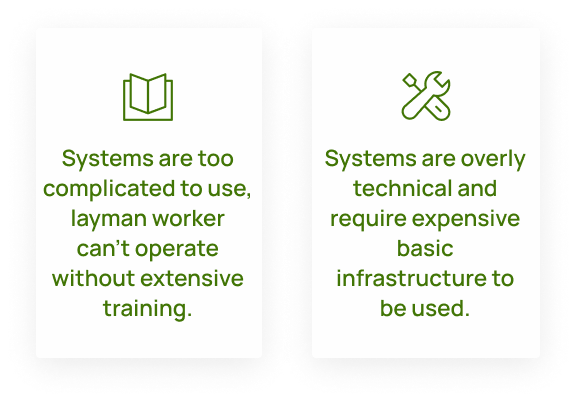
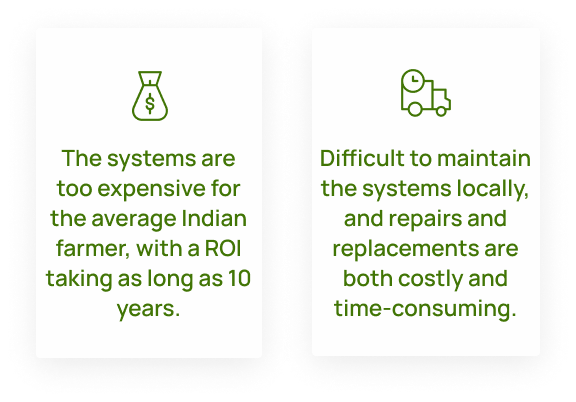
We conducted interviews with 23 farmers to identify the challenges they face when it comes to adopting climate control automation systems that are already available in the market. By directly engaging with the farmers, we sought to gain insights into the specific difficulties they encounter. These interviews provided valuable information regarding the barriers and obstacles hindering the widespread adoption of automation technologies in the agricultural sector.
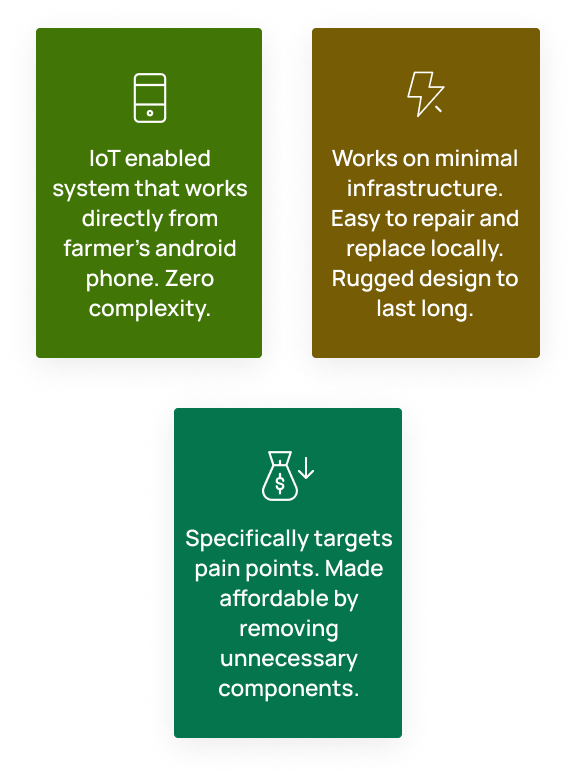
Four key insights were -
Solution.
After conducting several brainstorming sessions, our team identified key issues and subsequently narrowed down our focus to the most critical aspects for the minimum viable product (MVP). This selection process involved careful consideration of various factors to ensure that the MVP addresses the most crucial and pressing needs. By prioritizing these critical aspects, we aim to deliver an effective and impactful solution that meets the immediate requirements of our target users.
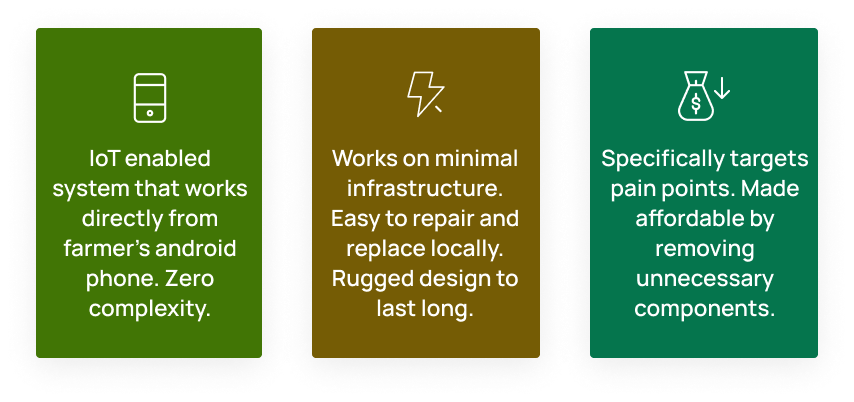
By focusing on these points, we hope to develop targeted solutions that address the unique challenges faced by these farmers and improve their livelihoods.
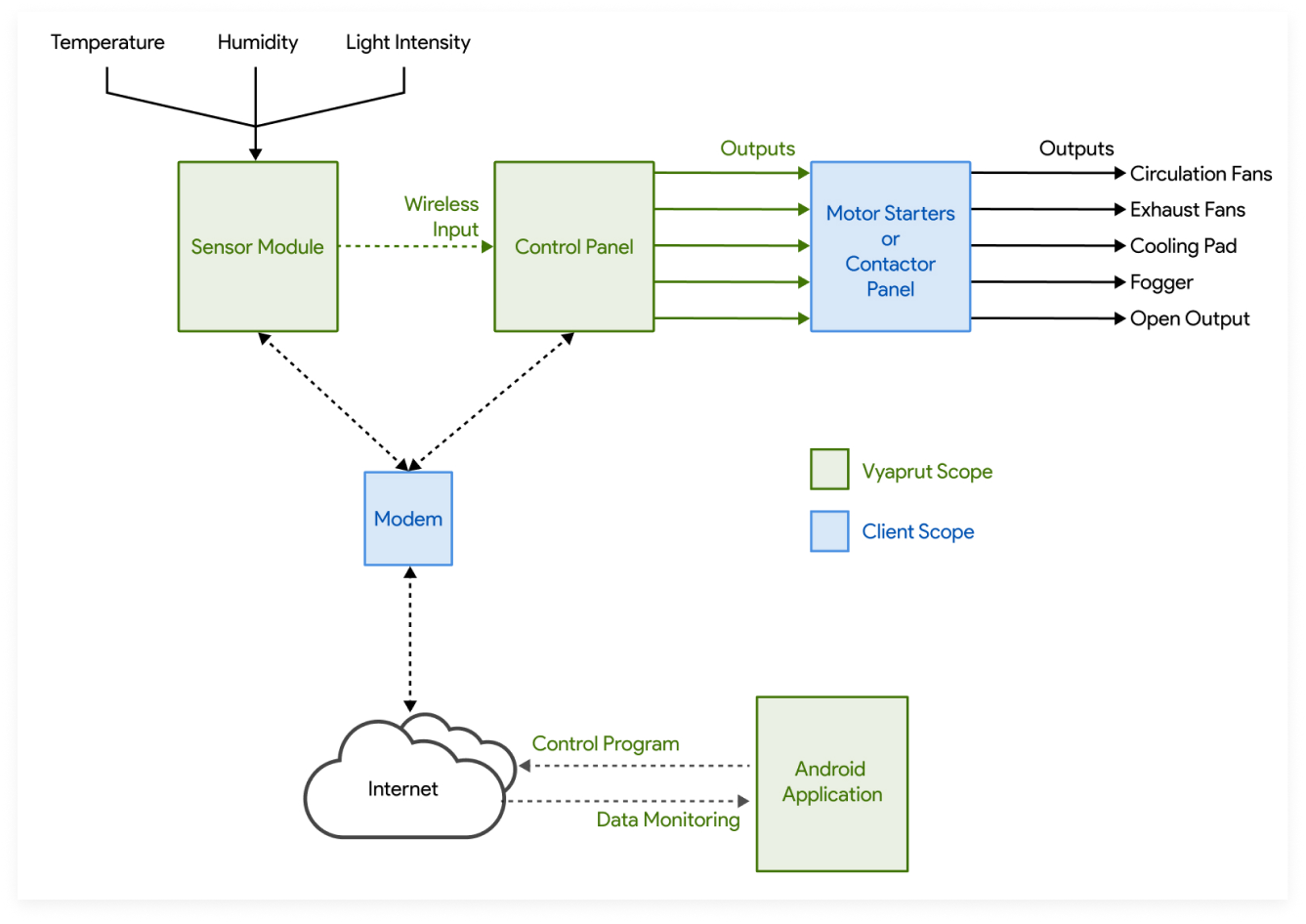
Operation Schematic.
A visual representation that outlines the operational workflow of the application & machine
Wireframing.
After finalizing the user flows, our team proceeded to the next phase of the design process by creating wireframes for the mobile application.
Through the creation of preliminary designs, we were able to envision the user experience in a concrete manner and embark on the process of determining the optimal means of achieving our goals. By exploring different layouts and configurations, we experimented with various design options to pinpoint the most effective approach.
Wireframe Samples.
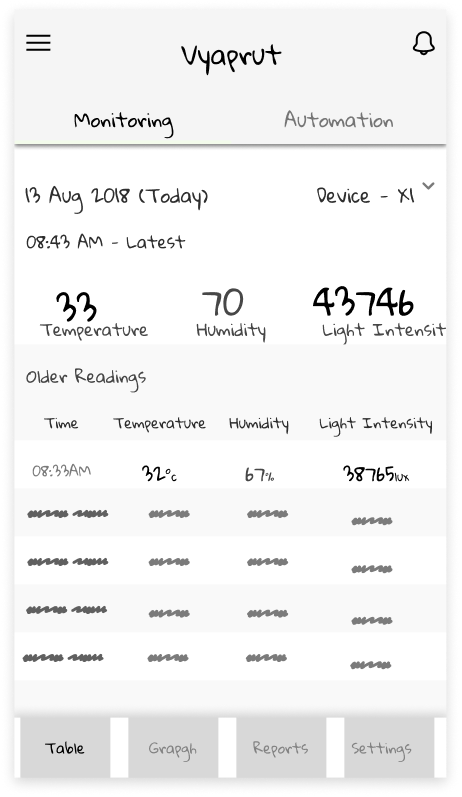
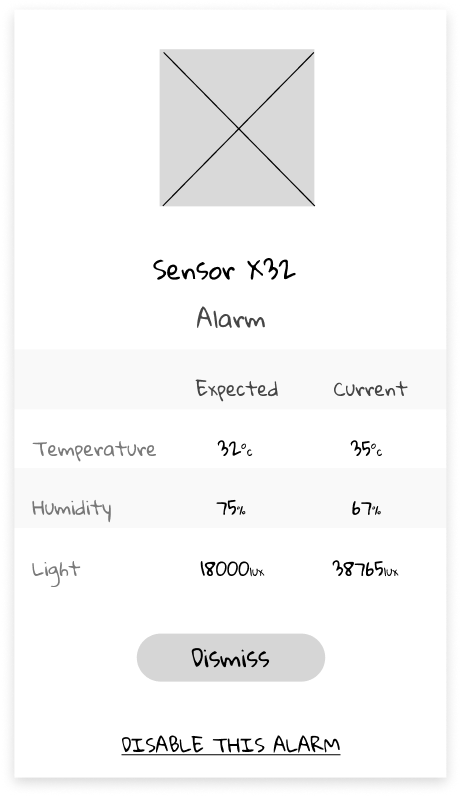
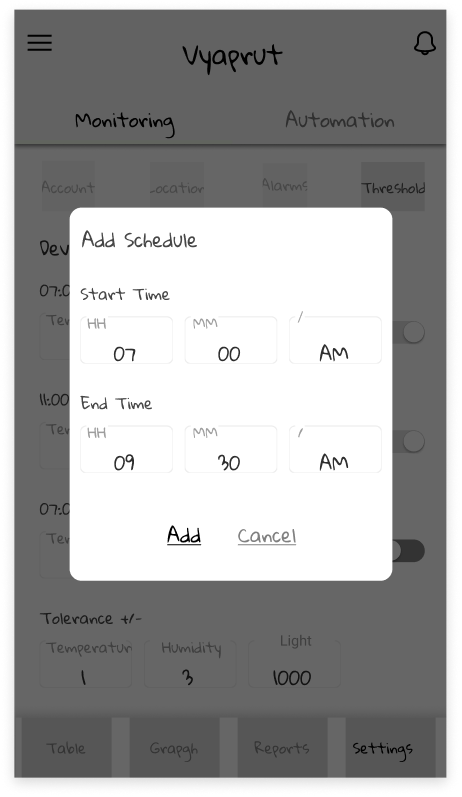
This iterative process allowed us to refine our ideas and ensure that the final product provides an intuitive and engaging user experience that meets the unique needs of Indian farmers.
Mockups.
After finalizing the wireframe blueprints with input from all relevant stakeholders, we proceeded to create high-fidelity mockups of the app.
These mockups provided a more detailed representation of the app's interface and functionality, allowing us to visualize the final product more accurately. By incorporating feedback from users and testing the mockups rigorously, we were able to refine the app's design and ensure that it meets the needs of farmers in rural India.
Mockup Samples.
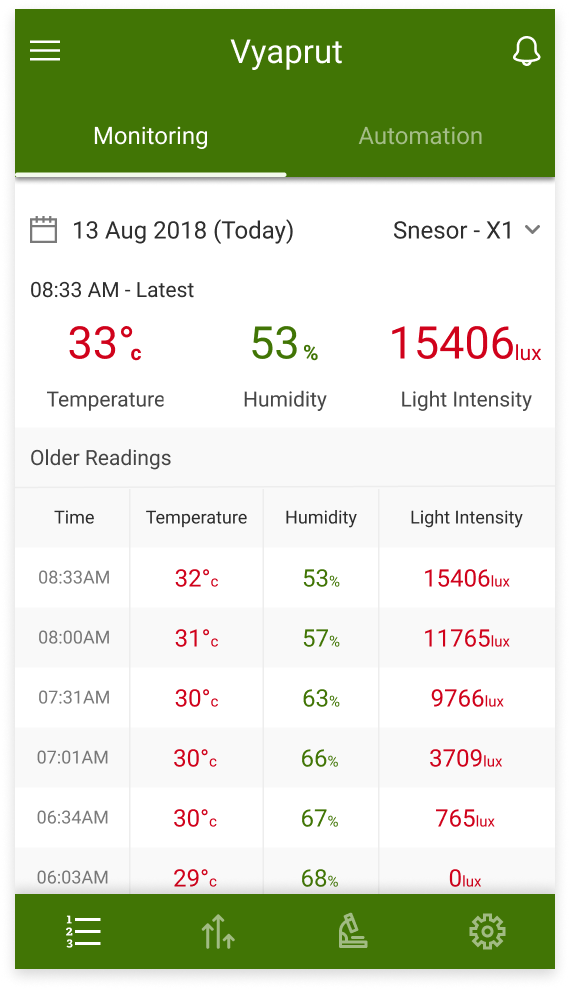
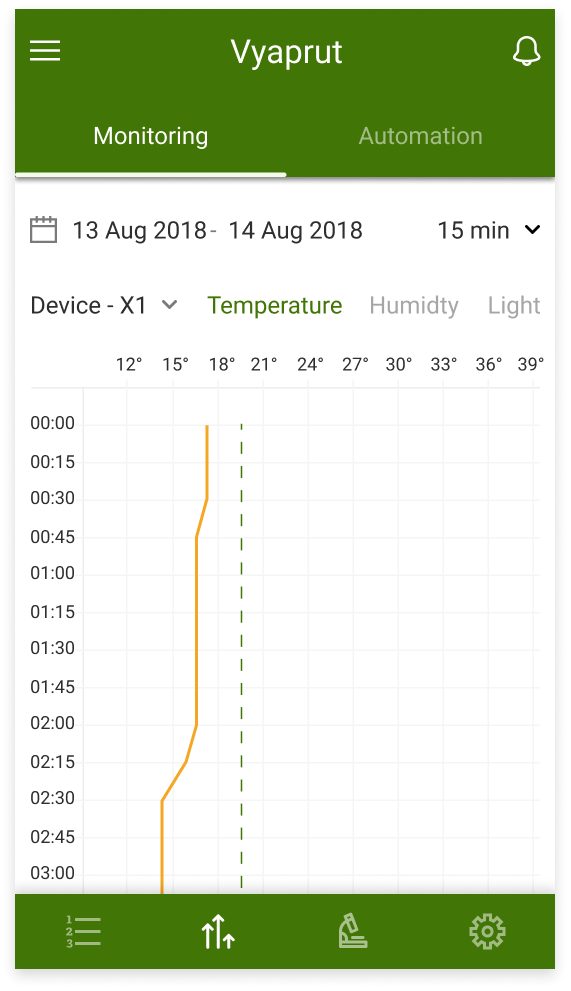
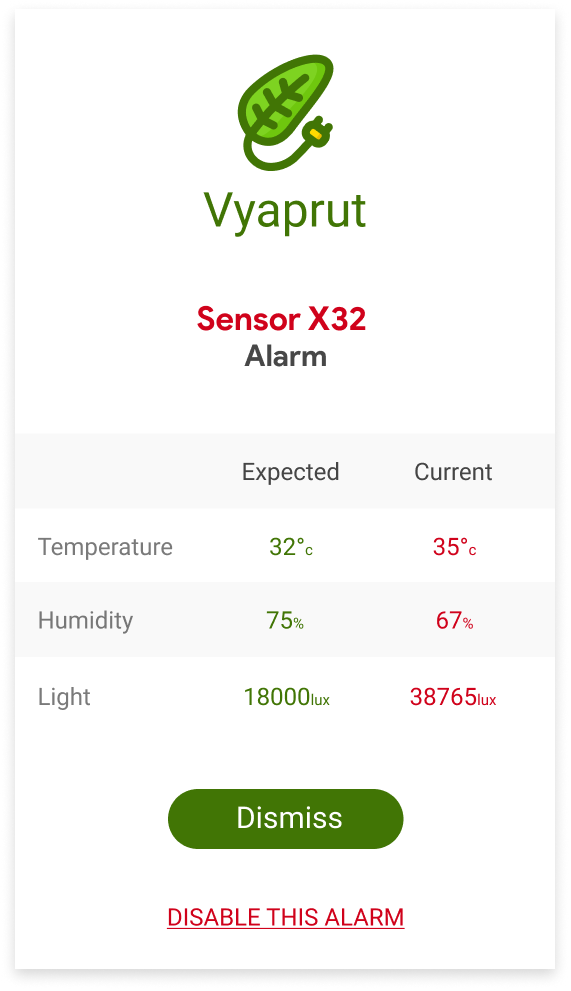
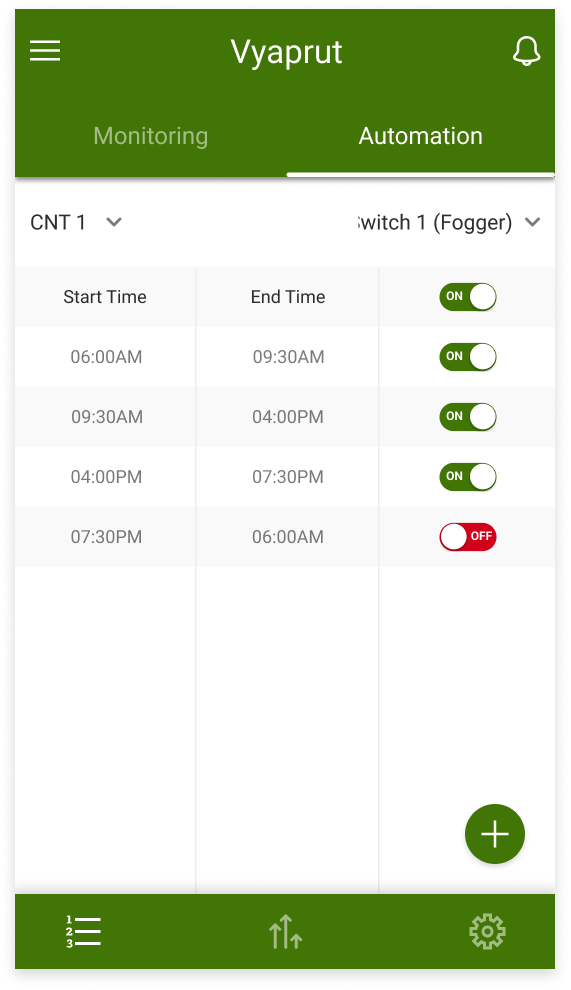
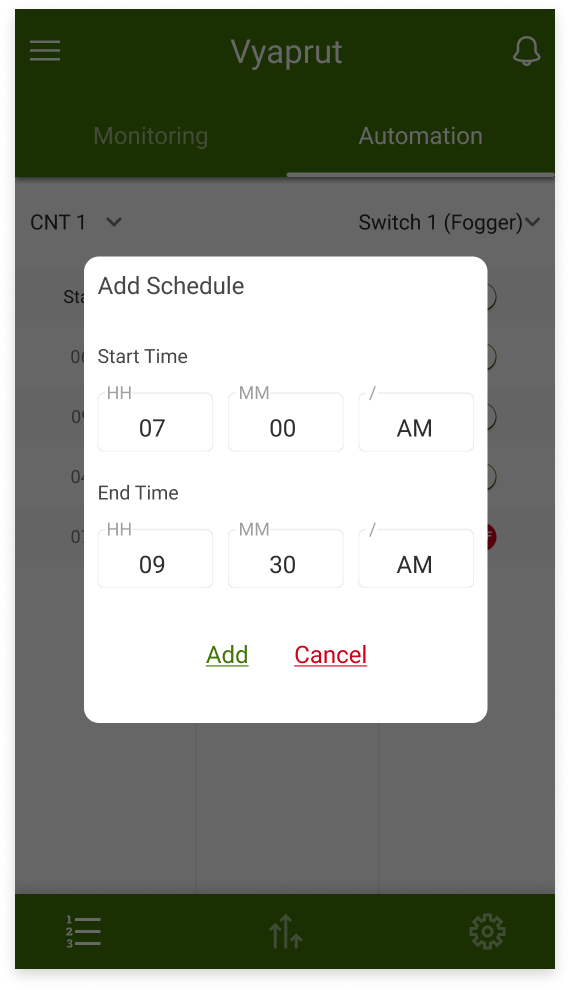
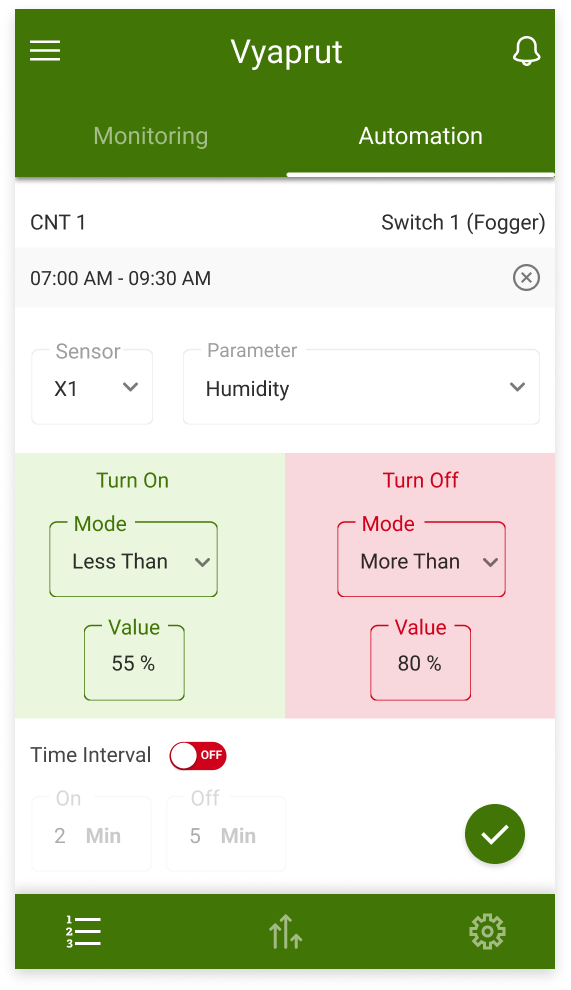
The mockups also enabled us to demonstrate the app's features and capabilities to potential users and stakeholders, fostering a deeper understanding and appreciation of the product's value.
Hardware Design.
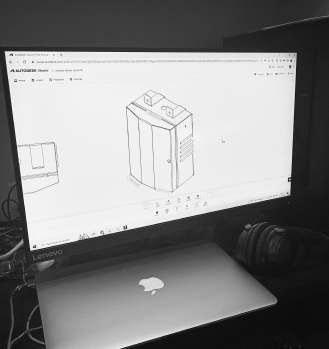
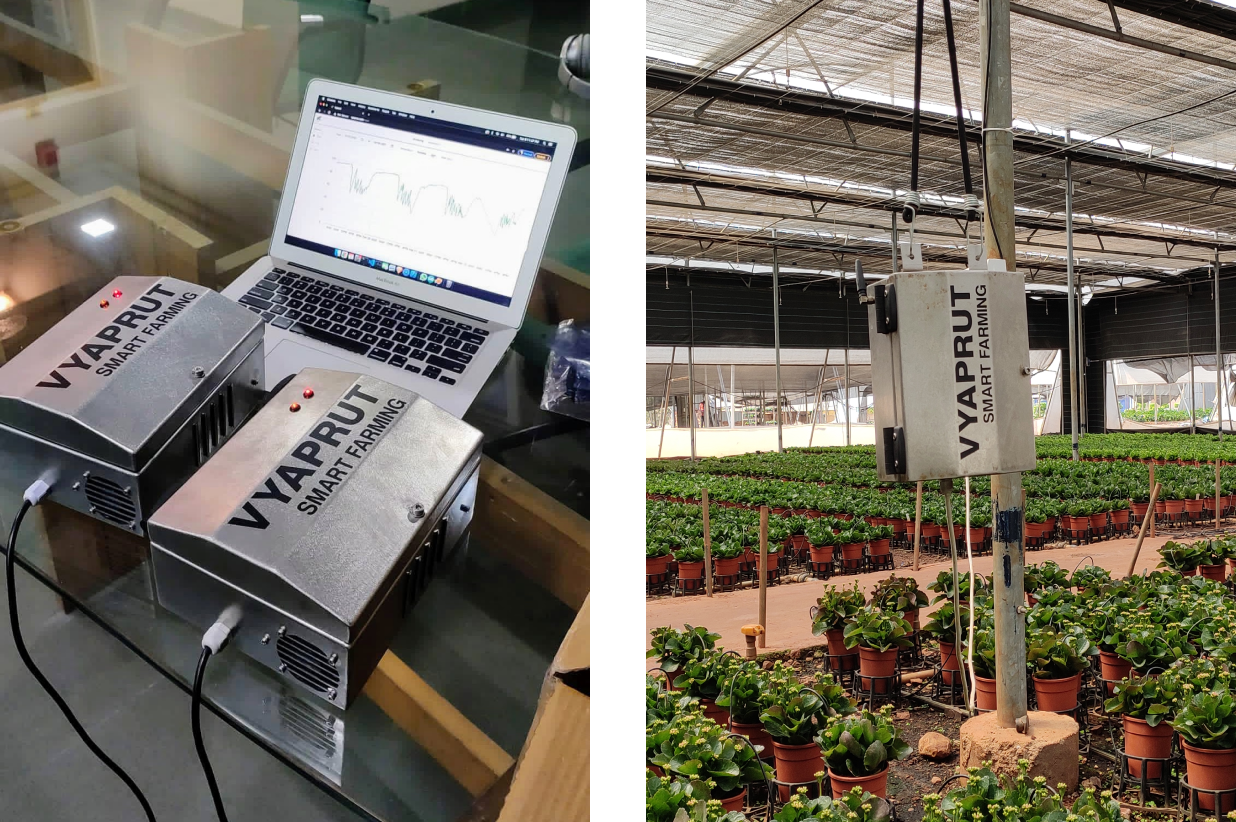
As we worked on our software, we also tackled the challenge of designing rugged hardware that could withstand the harsh conditions of the farm environment.
Our biggest obstacle was creating a unit that could endure rough handling and exposure to various climatic conditions. We knew that durability was paramount, and we ensured that our unit was built to last in even the most adverse conditions.
Through careful material selection and a robust design, we were able to create a product that was not only tough but also reliable in the field.
Finished Hardware.
Current Status.
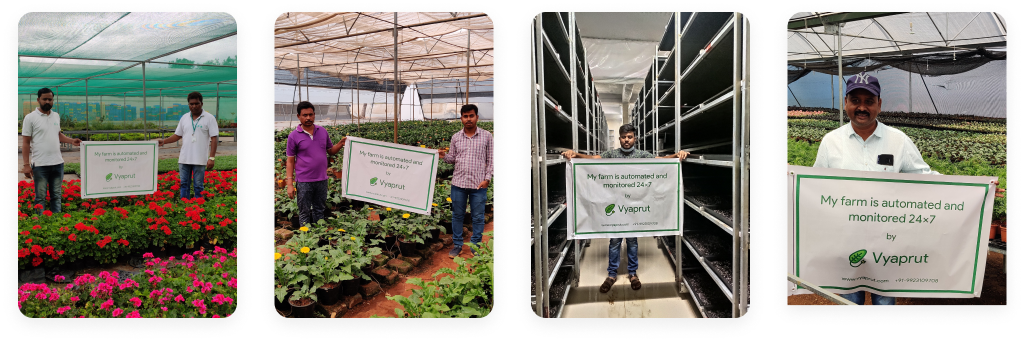
In December 2020, Vyaprut entered the market with an affordable, cloud-based climate control and monitoring system that has already empowered more than 300 farmers.
By utilizing our system, farmers have been able to improve their yields while reducing their labor expenses, leading to increased profitability.
Currently, Vyaprut is monitoring and automating over 1500 acres of greenhouses across India, helping farmers to achieve greater success and sustainability.
Check Other Work

Affordable and easy to use, cloud-based remote climate monitoring and climate control application for protected cultivation.
Scope
Design and development of mobile application and hardware system.
Team Size
5
Role
Team Leader
Problem.
Despite employing 43% of India's workforce, the agriculture sector contributes only 16% to the country's economy. the sector lacks productivity and efficiency.
This is especially true for protected cultivation, where monitoring and maintaining optimal climate is paramount to success. Proper climate management is crucial for crop health and yield, but without access to monitoring and automation technology, farmers face significant challenges in enhancing their productivity and profitability
As a result, there is an urgent need to bridge the technological gap in the agricultural sector and provide greater support to small-scale farmers, who are the backbone of India's rural economy.
User Research.
We conducted interviews with 23 farmers to identify the challenges they face when it comes to adopting climate control automation systems that are already available in the market. By directly engaging with the farmers, we sought to gain insights into the specific difficulties they encounter. These interviews provided valuable information regarding the barriers and obstacles hindering the widespread adoption of automation technologies in the agricultural sector.
Four key insights were -
Solution.
After conducting several brainstorming sessions, our team identified key issues and subsequently narrowed down our focus to the most critical aspects for the minimum viable product (MVP). This selection process involved careful consideration of various factors to ensure that the MVP addresses the most crucial and pressing needs. By prioritizing these critical aspects, we aim to deliver an effective and impactful solution that meets the immediate requirements of our target users.
By focusing on these points, we hope to develop targeted solutions that address the unique challenges faced by these farmers and improve their livelihoods.
Operation Schematic.
A visual representation that outlines the operational workflow of the application & machine
Wireframing.
After finalizing the user flows, our team proceeded to the next phase of the design process by creating wireframes for the mobile application.
Through the creation of preliminary designs, we were able to envision the user experience in a concrete manner and embark on the process of determining the optimal means of achieving our goals. By exploring different layouts and configurations, we experimented with various design options to pinpoint the most effective approach.
Wireframe Samples.
This iterative process allowed us to refine our ideas and ensure that the final product provides an intuitive and engaging user experience that meets the unique needs of Indian farmers.
Mockups.
After finalizing the wireframe blueprints with input from all relevant stakeholders, we proceeded to create high-fidelity mockups of the app.
These mockups provided a more detailed representation of the app's interface and functionality, allowing us to visualize the final product more accurately. By incorporating feedback from users and testing the mockups rigorously, we were able to refine the app's design and ensure that it meets the needs of farmers in rural India.
Mockup Samples.
The mockups also enabled us to demonstrate the app's features and capabilities to potential users and stakeholders, fostering a deeper understanding and appreciation of the product's value.
Hardware Design.
As we worked on our software, we also tackled the challenge of designing rugged hardware that could withstand the harsh conditions of the farm environment.
Our biggest obstacle was creating a unit that could endure rough handling and exposure to various climatic conditions. We knew that durability was paramount, and we ensured that our unit was built to last in even the most adverse conditions.
Through careful material selection and a robust design, we were able to create a product that was not only tough but also reliable in the field.
Finished Hardware.
Current Status.
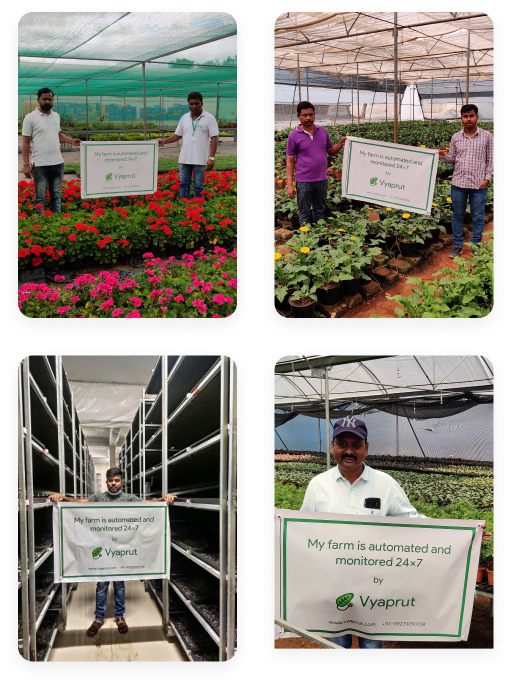
In December 2020, Vyaprut entered the market with an affordable, cloud-based climate control and monitoring system that has already empowered more than 300 farmers.
By utilizing our system, farmers have been able to improve their yields while reducing their labor expenses, leading to increased profitability.
Currently, Vyaprut is monitoring and automating over 1500 acres of greenhouses across India, helping farmers to achieve greater success and sustainability.
Check Other Work